Table Of Content
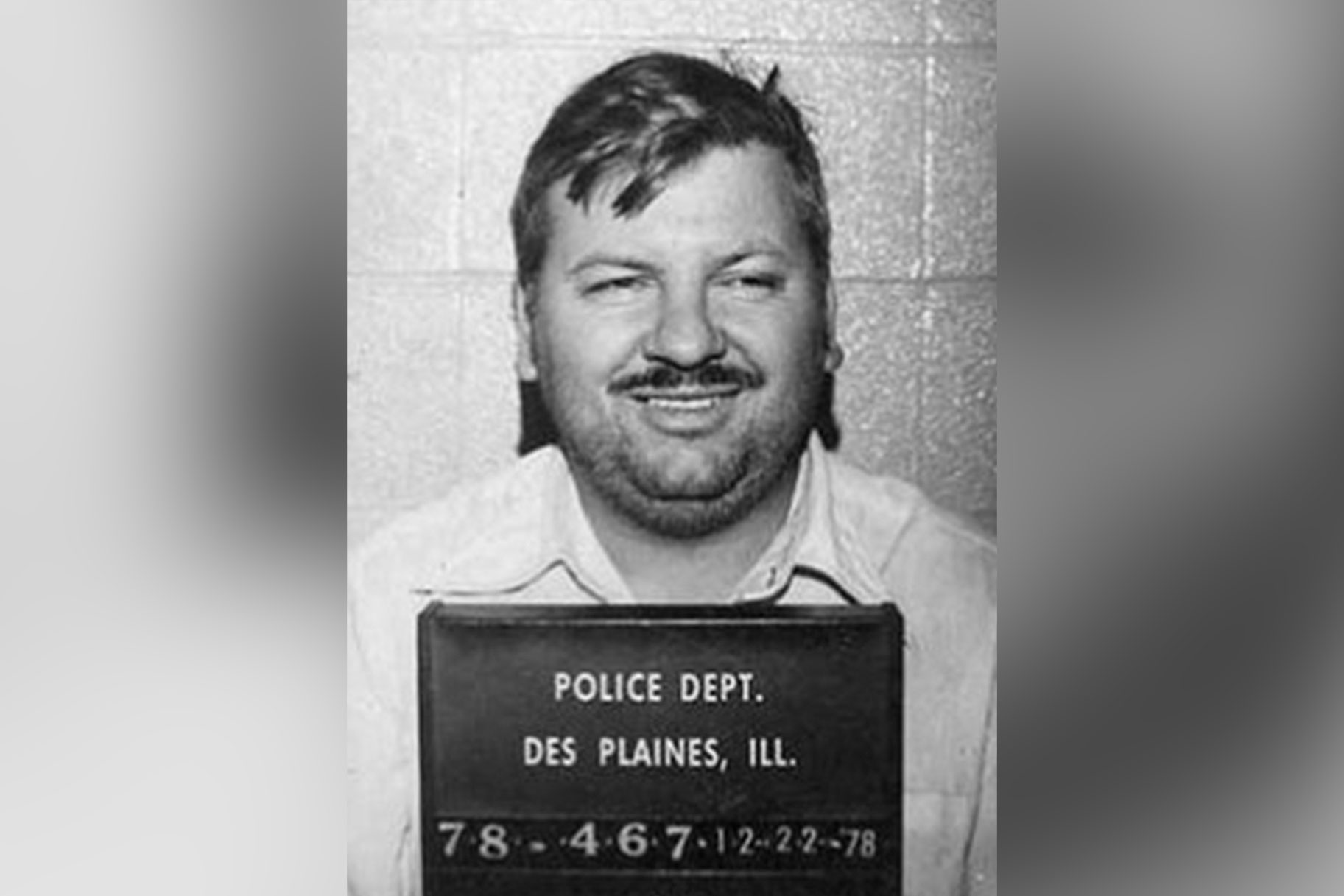
Keep reading for more on the John Wayne Gacy murders, facts about the killer himself, and details on the John Wayne Gacy house. Gacy was born into a blue-collar family and seems to have had a fairly ordinary childhood. But he exhibited a growing tendency toward sadism, which resulted in several encounters with the law in the 1960s.
Victims

He offered them paid, part-time work for cash, only to torture and strangle them to death. Born in Chicago on March 17, 1942, John Wayne Gacy had an abusive, tumultuous childhood. His father beat him, berated him as a “sissy,” and whipped him with a belt. When Gacy was seven, a family friend molested him but Gacy stayed quiet out of fear of further punishment. Realtor.comThough it looked like a normal suburban ranch, John Wayne Gacy’s house in Norwood Park, Illinois was actually the site of 33 brutal murders in the 1970s.
January 3, 1972: Gacy kills his first victim
Afterward, Judge Louis B. Garippo thanks the jury, noting, "Whatever the cost [of the trial], it was a small price... What we do for the John Gacys of this world we will do for everyone." One month after pleading guilty to sodomy, Gacy earns a 10-year prison sentence, the strict punishment meant to serve as "a further deterrent" to his preying on teenage boys. Gacy subsequently hires a high school senior to intimidate one of the boys into remaining silent, a move that backfires. From Gacy's first sexual assault conviction to his eventual execution, here are the key moments from one of the most notorious murder sprees in U.S. history. Gacy committed his first known murder in January 1972, after luring the 16-year-old Timothy McCoy to his house for sex.
March 2, 1976: Gacy divorces his second wife
Today, the house includes a big backyard, fireplace, and updated kitchen, according to Patch. Karen Engstrom/Chicago Tribune/TNS via Getty ImagesInvestigators carry the remains of a body found beneath the garage floor of the home of John Wayne Gacy on December 22, 1978. When he got out less than two years later, John Wayne Gacy outwardly tried to return to normal life. At the dawn of the 1970s, he married his second wife and moved into a new home at 8213 West Summerdale Avenue. But John Wayne Gacy’s house would soon become the scene of dozens of depraved murders. For a period of time, Gacy did not live entirely alone at 8213 West Summerdale Avenue.
Daywatch: How Illinois hospitals ranked for safety
Only 28 of Gacy's victims have been conclusively identified. The youngest were Samuel Stapleton and Michael Marino, both 14; the eldest were Francis Alexander and Russell Nelson, both 21. Little is known about Gacy’s children because, like the rest of the Gacy family, they have tried to avoid the public eye. It’s likely that both Michael and Christine have changed their name at some point in order to avoid being known as the children of the Killer Clown. The lot was so filled with human remains at one point that Gacy disposed of his last 4 victims in the Des Plaines River and Dresden Island Lock and Dam in the Illinois River. Serial killer John Wayne Gacy s home address, aka the site of his murders, was 8213 W.
A 1992 television movie titled To Catch a Killer explored the efforts to find out what happened to the missing teenage boys who were later discovered to be among Gacy’s victims. The movie starred Brian Dennehy, Michael Riley, and Margot Kidder, and Dennehy, who played Gacy, was nominated for an Emmy award. According to Dennehy, Gacy wrote a letter to him from prison, protesting his portrayal in the film and proclaiming his innocence. In total, 26 victims were found in the empty crawl space of his home and three others were found around the property. Gacy even drew a diagram to help officers locate the bodies during his confession. He was executed by lethal injection on May 10, 1994, at Stateville Correctional Center in Crest Hill, Illinois.
Possible additional victims
Pedophile Who Sexually Assaulted Drake Bell Flaunted Painting by Serial Killer John Wayne Gacy, New Doc Reveals ... - PEOPLE
Pedophile Who Sexually Assaulted Drake Bell Flaunted Painting by Serial Killer John Wayne Gacy, New Doc Reveals ....
Posted: Wed, 13 Mar 2024 07:00:00 GMT [source]
"There’s no evidence of any kind I’m aware of, anywhere else, that suggests any additional victims," he said. During closing arguments, Kunkle bristled at defense pleas for mercy. During his own summation for the jury, the prosecutor tore down the photos of the known victims, and strode to a spot in the courtroom where the trap-door to Gacy’s crawl space sat before the jury. Police discovered the bodies of 29 boys and young men in or near Gacy’s house. Four other bodies were found in the nearby Des Plaines River. The wooden entranceway to the crawlspace where John Wayne Gacy hid victims’ bodies was stored along with other trial evidence.
March 12, 1980: Gacy is convicted
With the murders, "I think he was trying to almost kill himself over and over," she said. She said he was sexually abused, had head injuries as a kid and had repressed homosexual tendencies. Her final impression of Gacy was that he wanted to be caught by police, and he was "relieved" to be behind bars. During Rignall's testimony, he said Gacy was "aided at one point by an accomplice," which was documented by a West Virginia University research paper on the insanity defense.
It was during an ensuing interview and a discussion of the crawl space, that Gacy even offered help. "He went into detail on what he had done to Rob Piest," he said. "And Rob Piest and four others were thrown into the Des Plaines River because his crawl space was too crowded."
"The stigma runs with the land, not the house," real estate appraiser Orell Anderson told the site. "When these houses come up for sale, some people buy the place thinking if they tear it down and change the address a little bit and do some cosmetic fixes, the stigma will go away. But it typically doesn't." “Why should we have to know about Gacy’s little hobbies and habits? In the early 1990s, I visited with Dolores Nieder at the Ravenswood home where her son Johnny Mowery grew up.
He was convicted of all 33 murders, the highest number attributed to one serial killer in American history. He was given the death penalty for 12 of those murders, with life sentences for the remaining 21. Returning to the bus station, Gacy picks up his first known murder victim, later identified as Timothy McCoy.
After bringing the teenager home, where they drink and engage in sexual acts, Gacy stabs him to death and buries him in a crawl space. According to Gacy, all of the murders took place on his property between the hours of 3 a.m. Gacy buried 26 of his victims in the crawlspace of his home, and three others were buried in other spots on his property. After immense pressure and surveillance from the police, according to History.com, Gacy eventually confessed to his crimes in December 1978.


No comments:
Post a Comment