Table Of Content
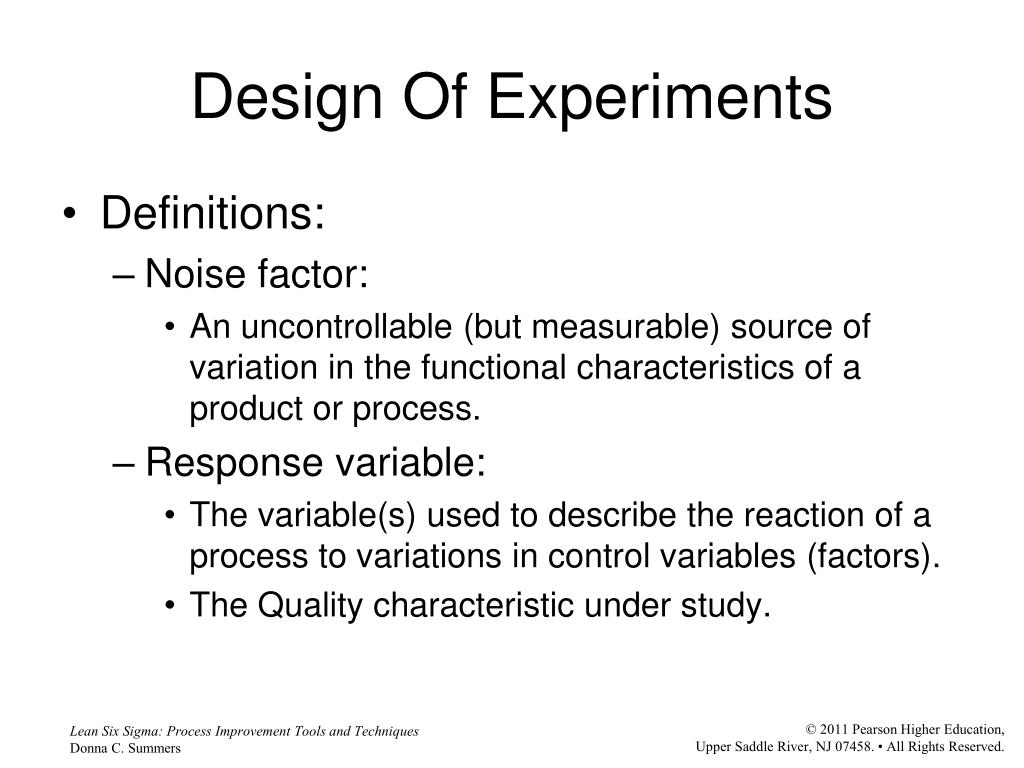
A response that is quantifiable makes the experiment well suited to the additional scrutiny of statistical regression techniques. The method was coined by Sir Ronald A. Fisher in the 1920s and 1930s. Design of Experiment is a powerful data collection and analysis tool that can be used in a variety of experimental situations. Otherwise, you could end up in a situation where all your runs look suspiciously different from what you expect given earlier experiments.
Experimenter effects
Despite these challenges, longitudinal studies have been key in fields like psychology, sociology, and medicine. They provide the kind of deep, long-term insights that other designs just can't match. "It is the spirit of variable design and flexibility that drove us to create FS Industrie," he adds. "A response to the changing nature of type, for brands that are responding to the changing nature of work."
How to select the Experimental Research Design best suited for your study?
Stanford Prison Experiment: Zimbardo's Famous Study - Verywell Mind
Stanford Prison Experiment: Zimbardo's Famous Study.
Posted: Mon, 13 Mar 2023 07:00:00 GMT [source]
Repeated Measures design is also known as within-groups or within-subjects design. We can see three main reasons that DOE Is a better approach to experiment design than the COST approach. So, for example, first we might fix the pH at 3, and change the volume of the reaction container from a low setting of 500ml to a high of 700ml. Michael Sadowski, aka Sid, is the Director of Scientific Software at Synthace, where he leads the company’s DOE product development. In his 10 years at the company he has consulted on dozens of DOE campaigns, many of which included aspects of QbD.
Covariate Adaptive Randomization
This type of experiment reveals the effect of the chosen variable under set conditions; it does not show what would happen if the other variables also changed. Repeated Measures design is an experimental design where the same participants participate in each independent variable condition. This means that each experiment condition includes the same group of participants. Some efficient designs for estimating several main effects were found independently and in near succession by Raj Chandra Bose and K. Kishen in 1940 at the Indian Statistical Institute, but remained little known until the Plackett–Burman designs were published in Biometrika in 1946.
Experimental Design Examples
Imagine that we want to optimize the expression of a target protein in bacterial cell culture. Here we predict that increasing temperature will increase soil respiration and decrease soil moisture, while decreasing soil moisture will lead to decreased soil respiration. As you can already tell, OFAT is a more structured approach compared to trial and error. Let’s say two baseball coaches are training their players in two completely opposite ways. One coach is training the first string players in traditional ways, the other coach is using new training programs of various countries to train the second string players. This allows for a more efficient use of resources, as you're only continuing with the experiment if the data suggests it's worth doing so.
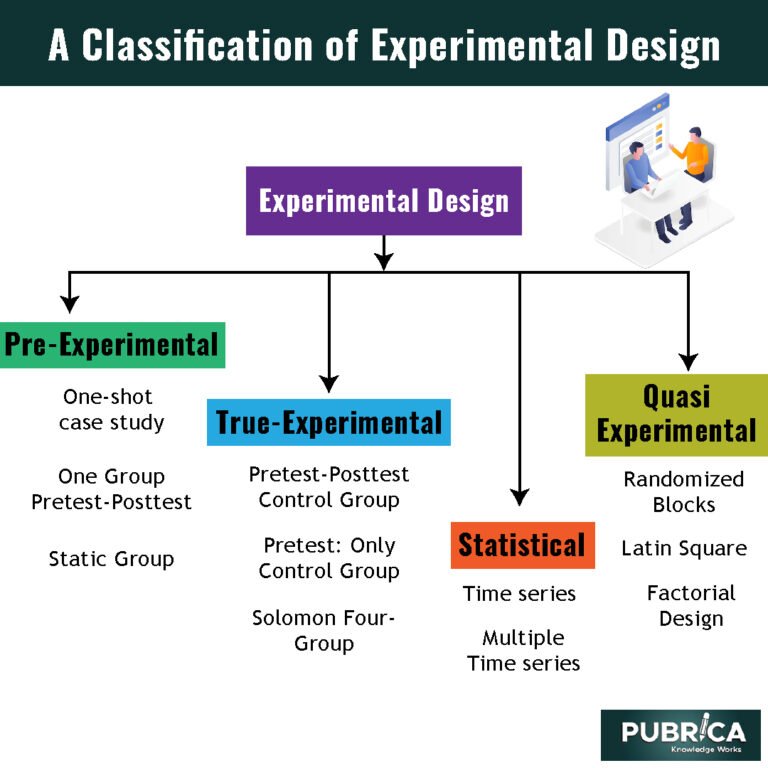
True Experimental Design Pros
His work helped create the foundations for a more organized approach to experiments. Fast forward to the Renaissance (14th to 17th centuries), a time of big changes and lots of curiosity. People like Galileo started to experiment by actually doing tests, like rolling balls down inclined planes to study motion.
There are multiple approaches for determining the set of design points (unique combinations of the settings of the independent variables) to be used in the experiment. The independent variable of a study often has many levels or different groups. Thus, when everything else except for one intervention is held constant, researchers can certify with some certainty that this one element is what caused the observed change. This is sometimes solved using two different experimental groups. Only when this is done is it possible to certify with high probability that the reason for the differences in the outcome variables are caused by the different conditions. Therefore, researchers should choose the experimental design over other design types whenever possible.
Consider what would happen in the application example if the evaluation of co-agulation rate were sensitive to ambient temperature and the temperature rose during the experiment. By randomizing the order in which the test combinations are run, researchers can eliminate the effects of unknown trending variables on the results of the experiment. Table I shows the sequence of events in the product development cycle that lead to process validation, along with the tasks to be accomplished at each phase and selected tools to be used. As the table indicates, during the process development phase the process should be evaluated to determine what would happen when conditions occur that stress it. One proven method to determine the sources of variability is DOE. Experimental design refers to how participants are allocated to different groups in an experiment.
Apply Full Factorial DOE on the same example
The study of the design of experiments is an important topic in metascience. The principle is that even when the same treatment is used in other experiments, the output would differ. Replication in experimental design helps to study the variation in the yield of different experiments.
Using Experiments to Launch New Products - HBR.org Daily
Using Experiments to Launch New Products.
Posted: Mon, 05 Nov 2018 08:00:00 GMT [source]
The variable the experimenter manipulates (i.e., changes) is assumed to have a direct effect on the dependent variable. To assess the difference in reading comprehension between 7 and 9-year-olds, a researcher recruited each group from a local primary school. They were given the same passage of text to read and then asked a series of questions to assess their understanding. Plus, we will we have support for different types of regression models. For example, we can estimate what we call a linear model, or an interaction model, or a quadratic model.
Optimal DOE has enabled the team to focus on what’s important and optimize the resources they spend running studies. In addition, optimal DOE also gives the team two or three optimal solutions that vary greatly in cost, providing the team options to go for the cheaper ones without compromising on quality. The bottom line is increased throughput, speed and operating efficiency of its machines, all while maintaining equal or better quality products. This design is particularly useful in health and social care research. For instance, if a hospital wants to implement a new hygiene protocol, it might start in one department, assess its impact, and then roll it out to other departments over time. This allows the hospital to adjust and refine the new protocol based on real-world data before it's fully implemented.


No comments:
Post a Comment